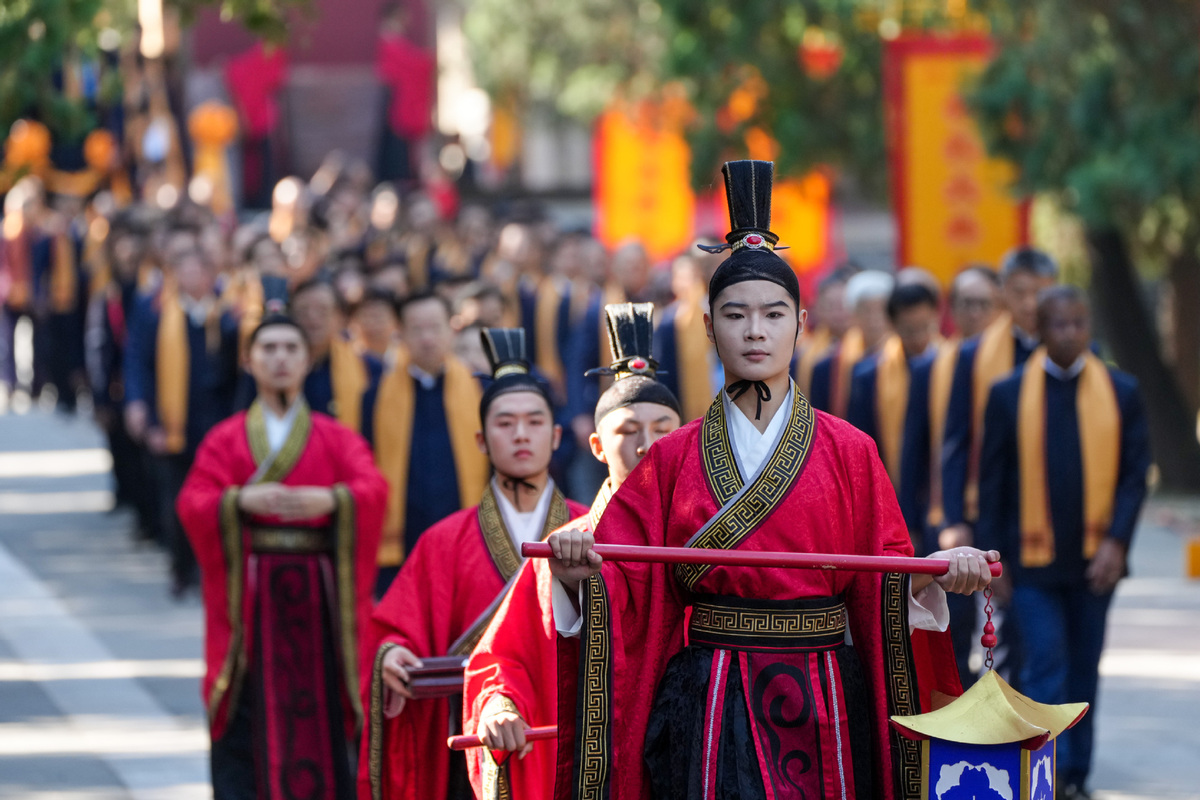
China International Confucius Cultural Festival
Introduction
The China International Confucius Cultural Festival is an annual event held in Qufu, Shandong province, the birthplace of Confucius, a revered Chinese educator, and philosopher. Confucius, who lived from 551 to 479 BC, is credited with being the first to establish a private school and his teachings have deeply influenced Chinese culture and beyond. The festival serves as a platform to celebrate and promote Confucian thought and cultural heritage, fostering mutual understanding and learning among civilizations. The 2024 edition of the festival, themed "Dialogue with Confucius: Mutual Learning among Civilizations," marks the 2,575th anniversary of the birth of Confucius, and it is set to include a variety of cultural performances, exhibitions, and dialogues that explore the relevance of Confucianism in contemporary society.
History
The China International Confucius Cultural Festival has roots in Shandong's rich cultural heritage and the significant historical impact of Confucianism, which has been a guiding philosophy for Chinese culture for centuries. Each year, the festival celebrates the enduring legacy of Confucius and his teachings, which emphasize the importance of education, ethics, and social harmony. The festival was initiated to honor these principles and has since grown into a significant cultural event that attracts participants from around the world. It has become a key venue for cultural exchange and dialogue, promoting Confucian ideas of benevolence, righteousness, and propriety. Through various programs and activities, the festival aims to keep the wisdom of Confucius alive and relevant in modern times, while also enhancing cultural exchanges globally.
Objectives
The primary objective of the China International Confucius Cultural Festival is to promote Confucian culture and philosophy, enhancing the understanding of Confucian values among diverse audiences. The festival seeks to strengthen cultural exchange and mutual learning among different civilizations, highlighting the global significance of Confucian teachings. It aims to foster an appreciation of traditional Chinese culture and its relevance in addressing contemporary global challenges, such as education, social harmony, and cultural cooperation. Additionally, the festival aspires to boost the influence of Chinese culture on the international stage, creating a platform for dialogue and collaboration among participants from various cultural backgrounds. By doing so, the festival contributes to the broader goal of promoting global peace and understanding through cultural engagement.
Events and Activities
Cultural Exhibitions
Cultural exhibitions are a highlight of the China International Confucius Cultural Festival, showcasing a wide array of traditional Chinese arts and crafts. These exhibitions offer visitors the opportunity to engage with ancient techniques that have been passed down through generations, reflecting the rich cultural heritage of Shandong province and beyond. Featured crafts include Lu embroidery, a national-level intangible cultural heritage known for its intricate and vivid designs, as well as mortise and tenon woodworking, paper-cutting, and the construction of the Luban lock. These exhibitions not only celebrate the craftsmanship of past artisans but also demonstrate the innovative ways in which contemporary artists and designers are integrating modern concepts with traditional methods. Through these cultural exhibitions, the festival highlights the enduring value of cultural heritage and its potential to enrich modern life.
Academic Conferences
Academic conferences held during the China International Confucius Cultural Festival provide a platform for scholars, educators, and students to delve into the teachings of Confucius and their relevance in today's world. These conferences feature discussions and presentations on various aspects of Confucian philosophy, such as education without discrimination, ethical governance, and social harmony. They attract participants from diverse cultural backgrounds, fostering an exchange of ideas and perspectives. The conferences aim to deepen the understanding of Confucian thought and its application in addressing modern challenges, such as global citizenship and sustainable development. By bringing together experts in the field, the festival encourages scholarly dialogue and collaboration, contributing to the ongoing study and appreciation of Confucianism as a living and evolving tradition.
Performances and Demonstrations
Performances and demonstrations are an integral part of the festival, bringing the teachings of Confucius to life through various artistic expressions. These performances include traditional Chinese music, dance, poetry recitations, and operas that draw inspiration from Confucian themes. The festival also features demonstrations of traditional crafts and techniques, such as woodblock printing, rubbings, and paper-cutting, allowing visitors to experience the artistry and skill involved in these practices. Through these engaging activities, the festival aims to connect audiences with the cultural significance of Confucian thought and its impact on Chinese arts and society. These performances and demonstrations serve as a bridge between past and present, offering insights into how Confucianism continues to inspire creativity and innovation.
Impact and Influence
The China International Confucius Cultural Festival has had a significant impact on both local and international levels by promoting Confucian culture and facilitating cross-cultural dialogue. It has played a vital role in preserving and revitalizing traditional Chinese culture, making it accessible and appealing to audiences worldwide. The festival has contributed to a deeper understanding of Confucian values and their relevance in contemporary society, promoting principles such as education, ethical governance, and social harmony. Additionally, the festival has enhanced cultural tourism in Shandong province, attracting visitors from around the globe and boosting the local economy. By fostering mutual learning and exchange among different civilizations, the festival has strengthened cultural ties and contributed to global efforts in promoting peace and understanding.
Future Prospects
The future prospects of the China International Confucius Cultural Festival are promising, as it continues to evolve and expand its reach. The festival aims to enhance its role as a leading cultural event that promotes Confucian values and fosters global cultural exchange. Plans for future editions include expanding the range of activities and programs to attract an even more diverse audience, while also incorporating innovative approaches to engage younger generations. The festival is expected to strengthen its partnerships with cultural and educational institutions worldwide, furthering its mission to promote Confucian thought and cultural heritage. By continuing to adapt and innovate, the festival is poised to maintain its relevance and impact in the years to come, contributing to a greater appreciation of Confucian culture on the global stage.








